

What You Should Know About Moroccan People
What You Should Know About Moroccan People
An Introduction to Moroccan Identity
Moroccan people embody a rich cultural mosaic shaped by centuries of history, geography, and exchange. Situated at the crossroads of Africa, Europe, and the Middle East, Morocco has developed a distinctive identity that blends Amazigh (Berber), Arab, African, Andalusian, and Mediterranean influences. We observe a society that values tradition while embracing modernity, where ancient customs coexist with contemporary lifestyles. Understanding Moroccan people requires attention to their values, social norms, languages, hospitality, and worldview.
- Check Our Morocco Desert Tours
Ethnic Diversity and Cultural Roots
Morocco’s population is primarily composed of Amazigh and Arab communities, with deep historical roots that predate modern nationhood. The Amazigh people are indigenous to North Africa, and their traditions, symbols, and languages remain integral to national identity. Arab influence arrived through historical migrations and the spread of Islam, contributing to language, governance, and cultural expression. We also recognize the historical presence of Jewish and Sub-Saharan African communities, whose contributions have enriched Moroccan society through trade, scholarship, music, and craftsmanship.
Languages Spoken in Morocco
Language is a defining feature of Moroccan life. Modern Standard Arabic is the official language, while Moroccan Arabic (Darija) is the most widely spoken vernacular. Amazigh languages are officially recognized and taught, reflecting the country’s commitment to cultural inclusivity. French is commonly used in business, administration, and education, while Spanish appears in northern regions and the Sahara. Increasingly, English is gaining prominence among younger generations. This multilingual reality reflects openness, adaptability, and a strong tradition of communication.
Religion and Spiritual Life
Islam plays a central role in shaping Moroccan values, ethics, and daily rhythms. The majority of Moroccans practice Sunni Islam, emphasizing moderation, tolerance, and community cohesion. Religious observance influences family life, social customs, and national holidays. At the same time, Morocco has a longstanding tradition of religious coexistence, historically accommodating Jewish and Christian communities. We find that spirituality in Morocco often expresses itself through respect, generosity, and social responsibility.
Family Structure and Social Values
Moroccan society places strong emphasis on family, respect, and collective well-being. Extended families frequently maintain close bonds, with elders holding a position of guidance and honor. We see that decision-making often considers family consensus, and mutual support is a cornerstone of social stability. Respect for parents, hospitality toward guests, and loyalty to one’s community are widely upheld values. These principles shape interpersonal interactions and reinforce social harmony.
Hospitality as a Way of Life
Hospitality in Morocco is not a gesture; it is a cultural obligation. Guests are welcomed with warmth, generosity, and attentiveness. Offering mint tea, sharing meals, and ensuring comfort are essential expressions of respect. We note that this tradition extends beyond homes into daily interactions, markets, and rural villages. Moroccan hospitality reflects pride in cultural heritage and a sincere desire to connect with others.
Cuisine and Culinary Traditions
Moroccan cuisine is internationally celebrated for its depth of flavor, balance of spices, and regional diversity. Staples include couscous, tagine, pastilla, and harira, often prepared with aromatic spices such as cumin, saffron, cinnamon, and ginger. Meals are social events, emphasizing sharing and togetherness. We recognize that food serves as a cultural language, expressing history, climate, and communal identity. Seasonal ingredients and time-honored techniques preserve authenticity while allowing creative variation.
Traditional Clothing and Aesthetic Expression
Clothing in Morocco reflects elegance, modesty, and craftsmanship. Traditional garments such as the djellaba, kaftan, and gandoura are worn during daily life and special occasions. These garments often feature intricate embroidery and regional patterns. We see clothing as an extension of identity, where color, fabric, and design communicate social context and cultural pride.
Art, Music, and Creative Heritage
Moroccan artistic expression spans architecture, music, crafts, and storytelling. From geometric tilework and carved wood to handwoven carpets and leather goods, craftsmanship remains highly respected. Musical traditions such as Gnawa, Andalusian, Chaabi, and Amazigh music reflect diverse cultural roots. We observe that art in Morocco often serves both aesthetic and spiritual purposes, preserving heritage while fostering innovation.
Work Ethic and Daily Life
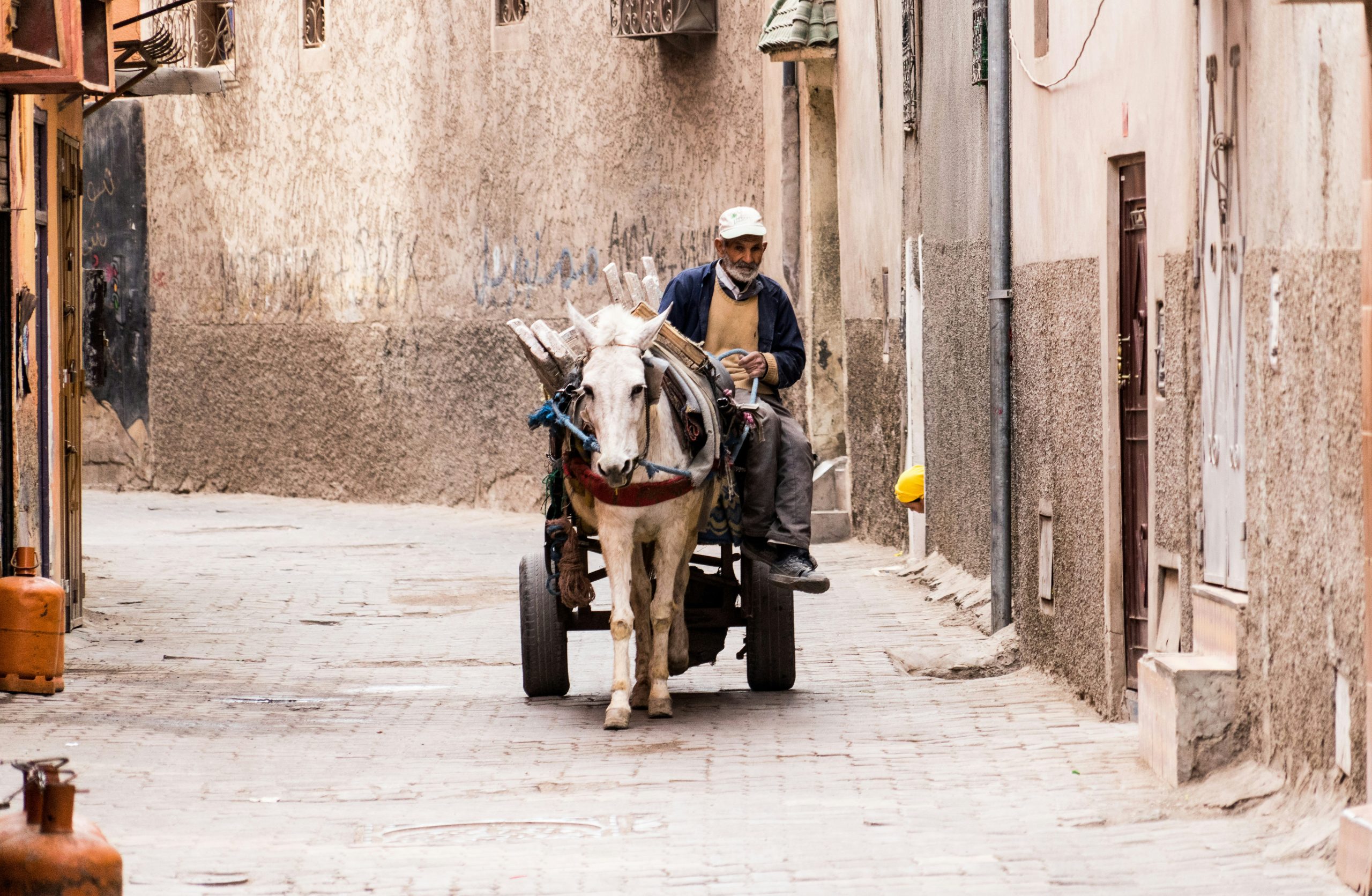
Moroccan people are known for resilience, adaptability, and entrepreneurial spirit. Markets, workshops, farms, and modern offices coexist across cities and rural areas. We find a strong culture of small businesses and family enterprises, particularly in crafts, agriculture, and tourism. Time is often approached flexibly, prioritizing relationships and quality over rigid schedules, while professionalism and ambition continue to grow in urban centers.
Modern Morocco and Social Evolution
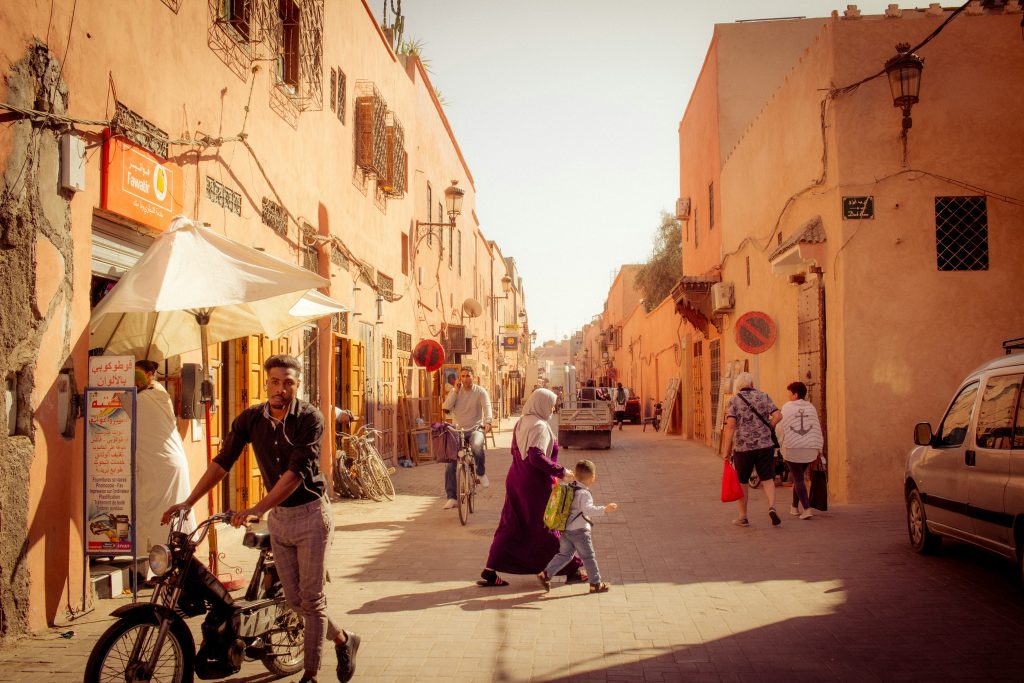
Contemporary Moroccan society is dynamic and evolving. Education, technology, and global connectivity are shaping new perspectives, particularly among youth. We observe increasing participation of women in education, business, and public life, alongside ongoing respect for tradition. This balance between heritage and progress defines Morocco’s social trajectory and reinforces its unique identity on the global stage.
Communication Style and Social Etiquette
Moroccan communication values politeness, indirectness, and emotional intelligence. Greetings are important, often accompanied by inquiries about family and well-being. We note that patience and courtesy are appreciated, and building trust precedes formal agreements. Understanding these norms fosters meaningful relationships and effective collaboration.
Regional Differences Across the Country
Moroccan people express their identity differently across regions. Coastal cities emphasize trade and international exchange, mountain communities preserve Amazigh traditions, desert regions highlight nomadic heritage, and imperial cities showcase historical scholarship and craftsmanship. We recognize that regional diversity strengthens national unity through shared respect and cultural exchange.
Why Understanding Moroccan People Matters
Understanding Moroccan people allows for authentic engagement, respectful collaboration, and deeper appreciation of a culture rooted in history and humanity. We see Morocco not as a single narrative but as a living tapestry, shaped by dialogue between past and present. This understanding enhances travel experiences, business relationships, and intercultural communication.


